
If you’ve spent any time in the peptide world, you’ve probably seen claims like:
“99% purity.”
“99.8% potency.”
“Third-party tested.”
“Same raw material as pharmaceutical companies.”
It sounds convincing, but a highly potent research peptide is not automatically a high-quality medication.
Potency is just one piece of the puzzle.
And when you’re injecting something into your body, a lot more factors matter than a single number on a lab report.
Potency Doesn’t Tell the Whole Story
Imagine two cars.
One has a 700-horsepower engine but no brakes, airbags, or quality control.

The other has a slightly smaller engine, built to rigorous safety standards.
Which one do you get in?
The same logic applies to injectable peptides. A peptide may contain the correct amount of active ingredient. That alone doesn’t make it appropriate for human use.
Other things that actually matter:
- Sterility
- Endotoxin (bacterial toxin) testing
- Identity (is it actually the correct peptide?)
- Purity beyond simply measuring the active ingredient
- Stability over time
- Proper manufacturing controls
- Appropriate storage and handling
Potency is one variable. The others are just as critical.
The Problem With Research Peptides
Most research peptides are sold with labels stating: “For research use only. Not for human consumption.”
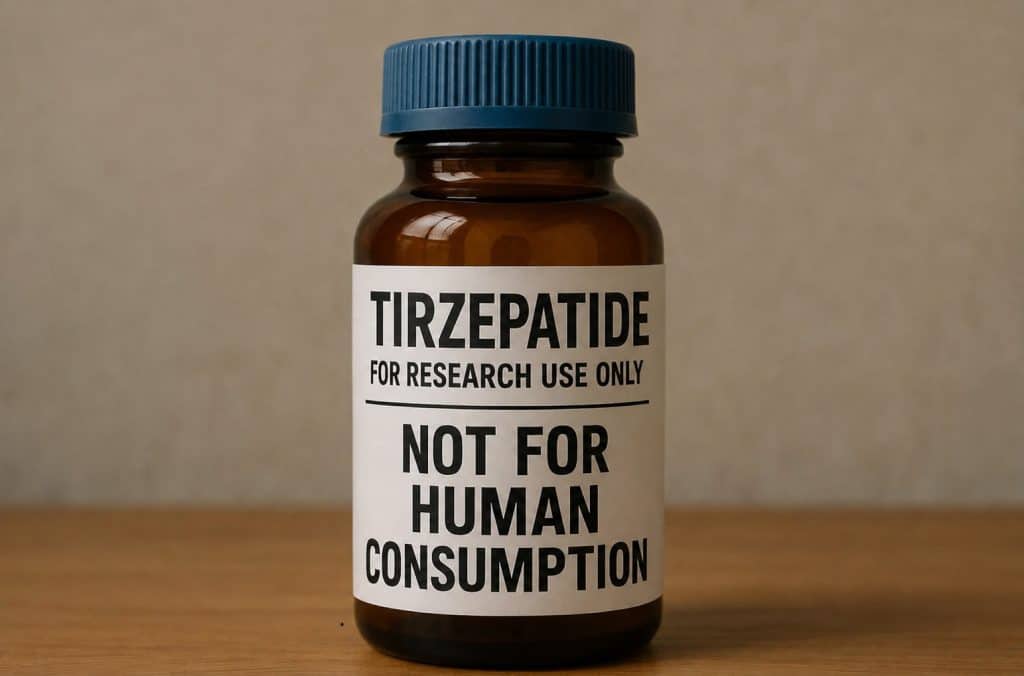
Those labels exist because these products are designed for laboratory research, not patient care.
Even when a company advertises third-party testing, that tells you only part of the story. A certificate of analysis may confirm potency or purity for a particular sample, but it doesn’t guarantee:
- Every vial is identical
- The product was manufactured under standards appropriate for injectable medications
- The product remained sterile throughout manufacturing and packaging
- The product has acceptable endotoxin levels
- There is ongoing quality oversight and documentation
A certificate of analysis (COA) may confirm potency, but it’s just a snapshot of one sample.

A quality system tracks the product from the moment it’s manufactured to the moment it reaches you.
Why Sterility Matters
Your digestive system acts as a barrier when you swallow something. Injection bypasses most of those defenses entirely, which is why injectable products require significantly stricter standards than supplements.
A product with great potency numbers can still wreck you if manufacturing quality or contamination control falls short.
What About Third-Party Testing?
Third-party testing is better than nothing, but it has real limits. A lab can measure identity, potency, and certain impurities.
What it can’t tell you is how the product was manufactured, handled, packaged, or stored, or whether every batch consistently hits the same standard. It’s the part that matters most when you’re talking about something you’re injecting.
A Better Option
This is exactly why Kino Clinic was built the way it was.
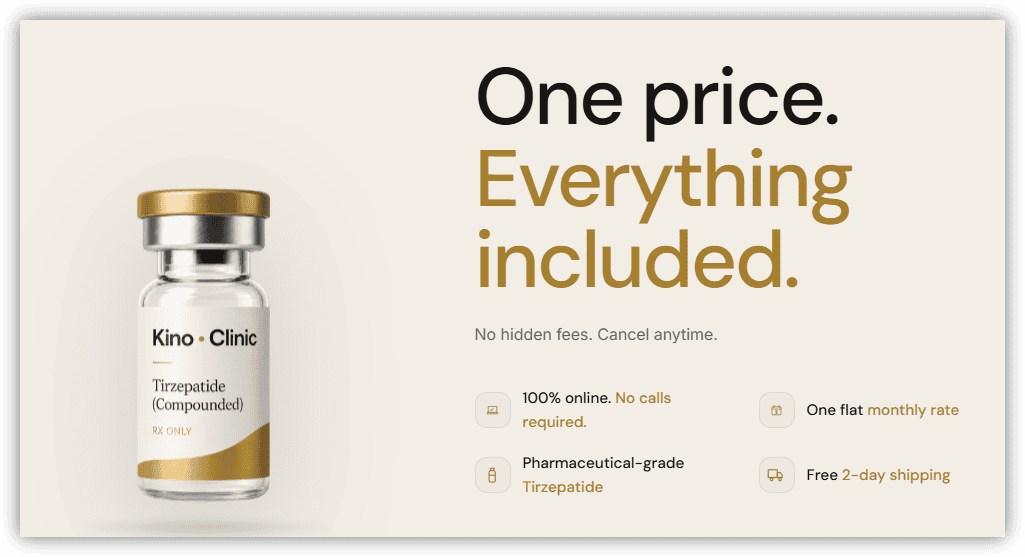
We work exclusively with licensed compounding pharmacies, and every prescription goes through a licensed physician.
That means real medical oversight, individualized dosing, and full accountability at every step.
No medication is completely risk-free. But going through a licensed provider and pharmacy gives you dramatically more protection than buying something marketed as a research chemical.
Before You Inject Anything, Ask These Questions
“99% potency” sounds impressive. Your confidence in the full picture matters more than any single number.
- Was it prepared within a legitimate quality system?
- Is there actual medical oversight?
- Can the product be traced if something goes wrong?
- Were the manufacturing and handling processes designed for medications intended for patient use?
When it comes to injections, the goal isn’t simply finding the highest potency.
It’s finding the highest confidence in the overall quality of the product you’re putting into your body.
Talk soon,
Greg O’Gallagher