
I get comments like this all the time.
“Dude, you’re so skinny. Why don’t you gain some size?”

My first thought when someone says that is that the guy saying it simply doesn’t get it (I never hear this comment from women, btw).
Think about this.
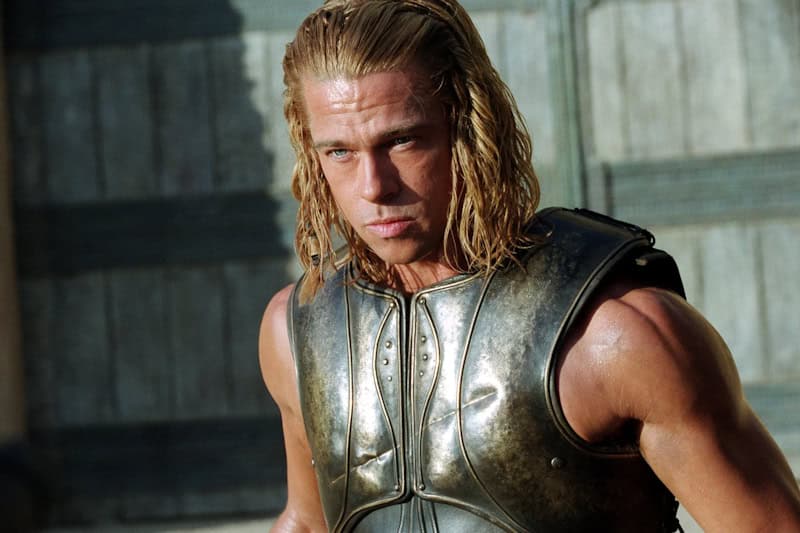
Look at Brad Pitt in Troy. He’s lean, 5’11” and about 175 lbs., wide shoulders, tight waist, defined and powerful.
Or as some gym bros would call “victim weight”, since he’s under 200 pounds.
Would he look more impressive if he pumped up to 220-230?
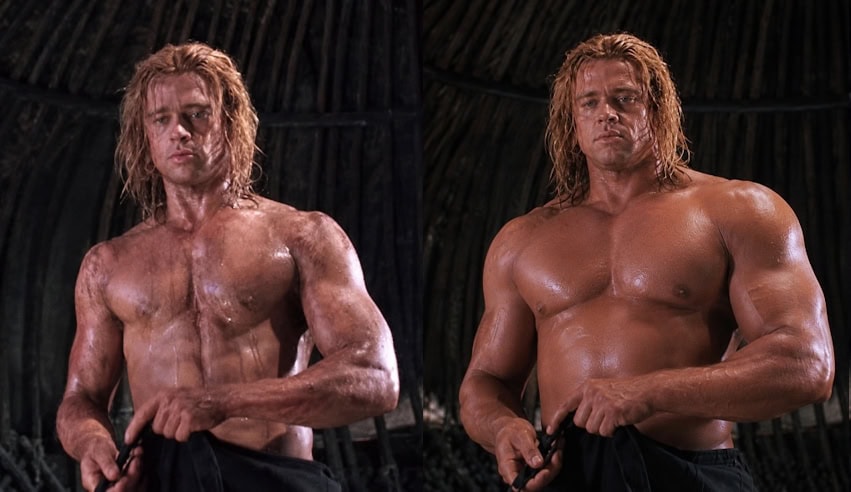
Achilles now looks like a jacked-up “swole” WWE wrestler instead of a badass agile warrior. Now he just needs a pair of those horrible wrestling Speedos to complete the look.
With this added muscle, he loses that aura.
And even if he is somewhat lean, the face doesn’t look as good.
What about Daniel Craig as 007?
Daniel Craig is 5’10 and was 174 lbs in Casino Royale.
What if he pushed his body and gained as much muscle as possible for his frame?
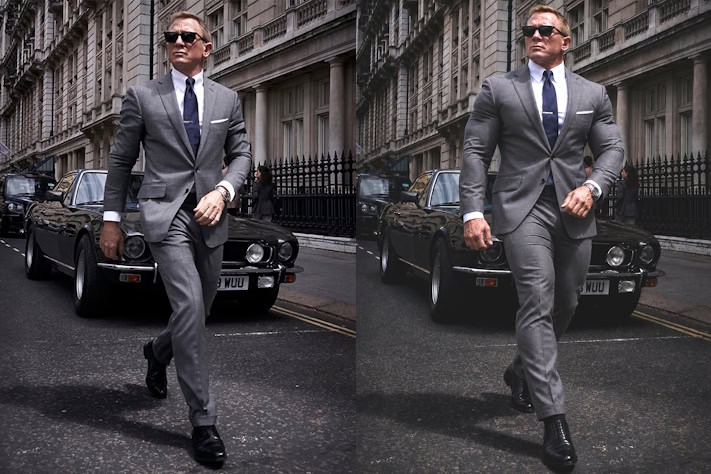
He goes from international secret agent to “International Try Hard”. He loses that edgy cool factor.
The funny thing about this is that if he did pack on a bunch of muscle as James Bond, he would probably impress the male audience more.
That’s the thing about maxing out muscle. It REALLY impresses young men.
Jay Alvarrez’s comment under my recent post puts it perfectly.
*“Lean is for the female gaze, bulky for the male gaze.”
Guys running on mainstream fitness logic always think more muscle is better.
But women are attracted to lean men with a masculine build, not insane amounts of muscle.
A great example of this is Austin Butler.
He obviously works out, but adding 20-30 lbs of muscle would be a big step back for him.

He would look ridiculous trying to play a jacked version of Elvis.
Austin Butler gets it.
The elite male physique is LEAN with incredible proportions.
- Brad Pitt in Troy
- Christian Bale in American Psycho
- Ryan Reynolds in Blade Trinity
That’s the standard I’ve held myself to for over a decade.
Every time I strayed, I’ve regretted it.
I’ve tested the other path.
A few times in my life, I pushed toward 185, chased more size, ate more.
And every single time, the hidden aura quietly disappeared.
My face softened, the jawline sharpness faded, and with it something I can only describe as a certain magnetism.
Every time I strayed, I ended up back at the same conclusion: Lean is where the ROI is.
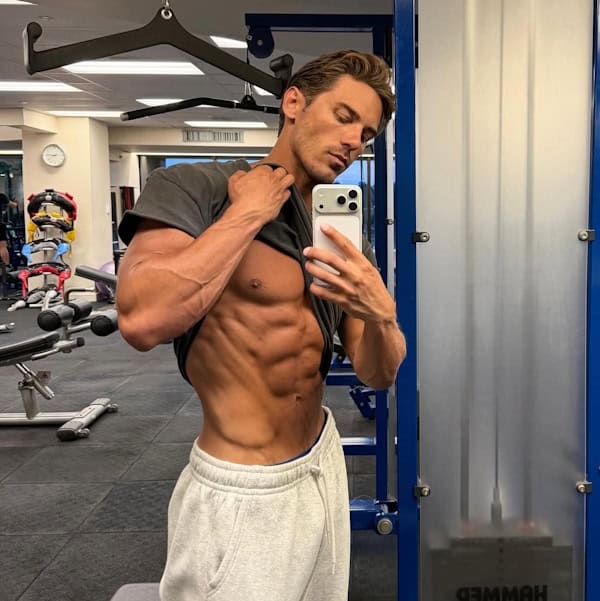
I feel so much better being lean again.
The biggest leaps in my life… in business, in confidence, in how people treated me, happened when I was lean.
Getting big is easy.
You eat more, lift heavy, and the scale moves.
Guys in your gym (and on Instagram) cheer you on.
You can rack up some impressive squat numbers and impress people who’ve never seen a truly lean physique in their lives.
Getting genuinely lean is rare and takes mastery.
Walk down any busy street right now.
How many truly lean men do you see?
A sharp jaw, a tight waist, chiseled forearms.
Maybe one in a hundred (probably less).
I’ve been heavier with a bit more muscle size.
I’m telling you, LEAN is where the ROI is.
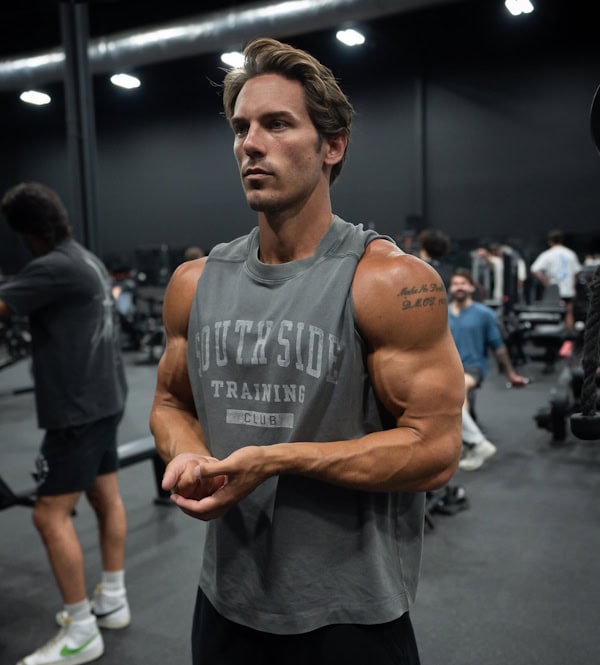
*Aim for a 24-25 BMI while being strong, proportionate, and defined.
If you’ve never been truly lean, below 10%, I can’t fully describe what that shift feels like.
Your face sharpens up, your focus improves, and people start responding to you in a way that’s hard to put into words.
It’s not a minor upgrade.
So here’s what I want you to take away from all of this.
Don’t get goal-hijacked.
Most guys start with the right instinct.
They want to be lean and get that movie star look.
Then the noise gets to them.
Comments in the gym, posts online, guys telling them they need to be 200 pounds to be taken seriously.
They start chasing a number on the scale instead of what they actually wanted in the first place.
It’s subtle, and it happens to almost everyone.
The standard has always been right in front of you.
Brad Pitt in Troy.
Lean, proportionate, powerful.
Don’t let anyone talk you out of it.
Talk soon,
Greg O’Gallagher